53 days, 4 negotiation rounds, Q3 loss and layoffs later, Boeing workers end strike and accept new contract
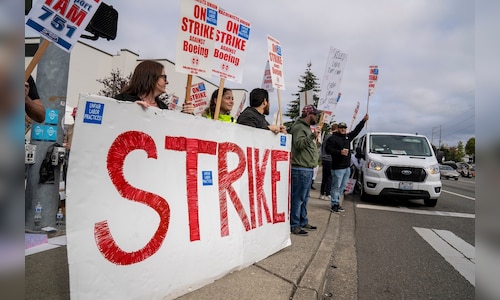
Operations at the US planemaker’s factories will be restored in the coming weeks as the union of nearly 33,000 workers voted to end a strike that’s led to a shutdown of jetliner production for more than seven weeks. Nearly 59% of union members voted in favour of the latest offer by the planemaker that includes a 38% wage increase over four years and enhanced retirement contributions.
Boeing workers’ strike, the first in 16 years, had begun on September 13 over a revision in wages and ended after the workers agreed to accept the fourth negotiation offer. The union represented by the International Association of Machinists and Aerospace Workers have previously rejected three offers.
As per the new offer, the hourly factory workers will also get a $12,000 signing bonus upon ratification and contributions to retirement savings plans will be boosted. It, however, won’t restore pensions, a key point of contention for some veteran employees and part of the original demands put forth by the striking workers.
According to Jefferies analyst Sheila Kahyaoglu’s estimates, cited by Bloomberg news agency, Boeing faces about $1.1 billion in higher salary costs over four years under the deal.
The contract’s ratification on the eve of Election Day cleared the way for a major U.S. manufacturer and government contractor to restart Pacific Northwest assembly lines that the walkout idled for 53 days.
Also Read: Boeing raises $21 billion in capital hike to boost liquidity
Bank of America analysts estimated last month that Boeing was losing about $50 million a day during the now-ended strike, which did not affect a nonunion plant in South Carolina where the company makes 787s. However, earlier estimates cited by Bloomberg News suggested that the stoppage at the plants was costing the company about $100 million a day in lost revenue.
Boeing CEO Kelly Ortberg said in a message to employees that he was pleased to have reached an agreement. “While the past few months have been difficult for all of us, we are all part of the same team,” Ortberg said. “We will only move forward by listening and working together. There is much work ahead to return to the excellence that made Boeing an iconic company.”
According to the union, the 33,000 workers it represents can return to work as soon as Wednesday or as late as Nov. 12. Ortberg has said it might take “a couple of weeks” to resume production in part because some workers might need retraining.
Union machinists, who had been striking for more than two months, assemble the 737 Max, Boeing’s best-selling airliner, along with the 777 or “triple-seven” jet and the 767 cargo plane at factories in Renton and Everett, Washington.
They previously rejected Boeing’s offer to raise pay by 25% over four years, which was far less than the union’s original demand for 40% wage increases over three years. They also voted to reject the planemaker’s second offer of raises of 35% over four years, but no revival of pensions
The monetary impact of the strike was also seen in the company’s results for the July to September quarter. Boeing reported a more than $6 billion loss for the third quarter, its largest since 2020 when the pandemic halted most aircraft demand and its bestselling aeroplane was grounded after two crashes. In the third quarter, Boeing had a negative free cash flow of $2 billion.
Meanwhile, as the standoff continued, new CEO Kelly Ortberg announced about 17,000 layoffs and a stock sale to prevent the company’s credit rating from being cut to junk status. S&P and Fitch Ratings said last week that the $24.3 billion in stock and other securities will cover upcoming debt payments and reduce the risk of a credit downgrade.
Boeing has explained that as per the latest offer, the average annual pay for machinists would rise to $119,309 in four years, which is $75,608 currently.