
Foreign investments in India surge as global giants commit billions to tech, energy, and defence

 1 / 12
India Draws Major Global Investments: India’s economic landscape is shifting as foreign companies increase their investments across a variety of sectors, driven by India’s large consumer market and supportive government policies. Initiatives promoting local manufacturing have opened new avenues, making the country a key player in global supply chains and a focal point for high-profile corporate investments.
 2 / 12
Electronics Sector Gains Momentum: In recent years, India’s electronics industry has seen remarkable foreign investment, especially in mobile phone manufacturing. Apple and Samsung have expanded their production in India, resulting in a 40.5% increase in mobile phone exports in 2024. This growth reflects India’s emerging status as a key hub for electronics, as foreign investors view the country as a promising production base with vast market potential.
 3 / 12
Apple’s New Manufacturing Shift: Apple has made a strategic shift by producing the iPhone 16 series, including the high-end Pro and Pro Max models, entirely in India. This move, carried out at Foxconn’s facility in Tamil Nadu, reflects Apple’s efforts to diversify its manufacturing operations and reduce dependence on other markets. In total, Apple has produced $14 billion worth of iPhones within India.
 4 / 12
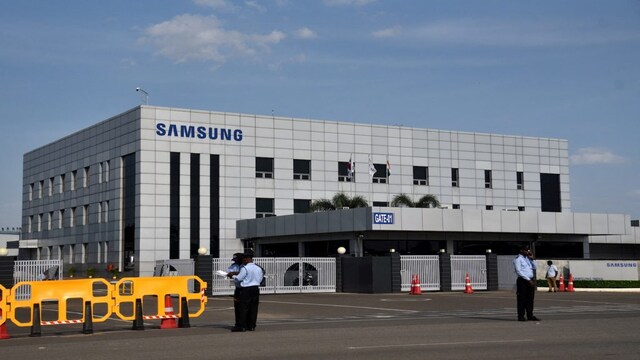
Samsung’s Expansion in Noida: Samsung has established the world’s largest mobile manufacturing facility in Noida, doubling its production capacity from 68 million to 120 million units per year. This expansion aligns with the company’s commitment to “Make for the World,” through which Samsung manufactures and exports mobile devices to international markets. With a focus on research and development within India, Samsung has also tailored its devices to meet local demands. (Reuters photo)
 5 / 12
Semiconductor Industry Builds Infrastructure: India is making strides in building its semiconductor industry to reduce reliance on imports, driven by partnerships and local manufacturing initiatives. Tata Group, collaborating with Taiwan’s Powerchip Semiconductor Manufacturing Corporation (PSMC), is investing $11 billion in India’s first semiconductor fabrication plant in Dholera. The facility will manufacture 28nm technology chips, primarily for automotive and consumer electronics. (Shutterstock photo)
 6 / 12
Micron’s Major Semiconductor Project: US-based Micron Technology is investing $2.75 billion in an assembly and testing plant in Sanand, Gujarat. The facility is expected to create around 5,000 direct and 15,000 indirect jobs, supporting India’s bid to become a significant player in the global semiconductor market. Under the India Semiconductor Mission, this plant will focus on assembling DRAM and NAND memory technologies, which are crucial components for various electronics. India’s government is providing incentives, covering approximately half of the project cost.
 7 / 12
Aerospace Sector Sets New Targets: India has established ambitious targets for its aerospace sector, aiming to achieve a market size of approximately $63 billion by 2026. A key player in this growth, Boeing has invested $200 million in its largest engineering and technology centre outside the United States, located in Bengaluru. This facility supports both commercial and defence sectors and collaborates with India’s startup ecosystem. (AP photo)
 8 / 12
Defence Manufacturing Gets a Boost: India’s defence manufacturing sector has received significant foreign investment, especially through Sweden’s Saab AB, which became the first foreign company to receive approval for 100% ownership in this area. Saab’s plant will produce the Carl-Gustaf M4 shoulder-fired rocket system, demonstrating India’s potential as a defence manufacturing hub.
 9 / 12
Lockheed and Tata Collaboration: Tata Advanced Systems, in collaboration with Lockheed Martin, has strengthened India’s defence production capacity through the manufacture of the C-130J Super Hercules airlifter and S-76 helicopter parts in Hyderabad. This facility not only serves India’s needs but also supplies parts globally, bolstering India’s presence in the defence production supply chain and expanding its role in international defence manufacturing.
 10 / 12
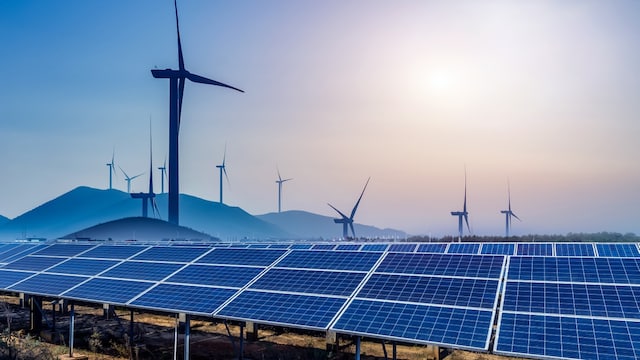
Renewable Energy Expansion: India’s commitment to green energy continues to attract substantial investments. The country aims to achieve 500 gigawatts of renewable energy capacity by 2030, and Amazon has pledged an additional $15 billion in India, focusing on various renewable projects.
 11 / 12
TotalEnergies’ Solar Ventures: France’s TotalEnergies has committed to significant solar power projects across India, supporting the country’s objective to reach 450 gigawatts of renewable energy capacity by 2030. These projects reflect India’s strategy to position itself as a global leader in renewable energy, with large-scale solar plants set to power a substantial portion of India’s energy needs. (Reuters photo)
 12 / 12
Indian Railways’ Modernisation: Siemens is contributing to India’s rail modernisation goals through a contract to supply 1,200 electric locomotives to Indian Railways. The locomotives, to be manufactured at a facility in Dahod, support India’s shift toward greener transportation solutions, enhancing the country’s rail infrastructure while promoting sustainable technology in public transportation.


