‘Naked greed’ — Sridhar Vembu slams rival Freshworks for laying off over 600 employees
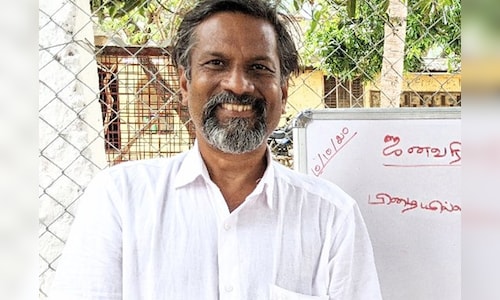
Those firms, Vembu says, should not expect loyalty from their staffers — a statement he made as an apparent jibe at his company Zoho’s competitor Freshworks.
“A company that has $1 billion cash, which is about 1.5 times its annual revenue, and is actually still growing at a decent 20% rate and making a cash profit, laying off 12-13% of its workforce should not expect any loyalty from its employees ever. And to add insult to injury, when it can afford $400 million in a stock buyback,” Vembu wrote in a post on microblogging platform X, without naming any specific company.
| Some of the biggest layoffs of 2024 | |
| Intel | 15000 |
| Tesla | 14000 |
| Cisco | 9850 |
| Toshiba | 4000 |
| SAP | 8000 |
| Getir | 3300 |
| Paytm | 3000 |
| Xerox | 3000 |
| Microsoft | 2900 |
| Paypal | 2500 |
| UKG | 2200 |
| Farfetch | 2000 |
| Unity | 1800 |
| Wayfair | 1650 |
| Infineon | 1400 |
| Flipkart | 1100 |
| IBM | 1000 |
| TikTok | 1000 |
| Indeed | 1000 |
| 1000 | |
| Source: layoffs.fyi | |
“I can understand the unfortunate reality of layoffs when a business is struggling or declining and making a loss. This is not that situation, this is naked greed, nothing less,” he added.
A company that has $1 billion cash, which is about 1.5 times its annual revenue, and is actually still growing at a decent 20% rate and making a cash profit, laying off 12-13% of its workforce should not expect any loyalty from its employees ever. And to add insult to injury,…
— Sridhar Vembu (@svembu) November 7, 2024
Zoho founder’s remarks came a day after Freshworks reported its results for the July to September 2024 quarter in which its total revenue was $186.6 million, a growth of 22% compared to total revenue of $153.6 million in the same quarter of 2023, and 22% adjusting for constant currency. The firm also raised its full year 2024 revenue, non-GAAP income from operations and non-GAAP net income per share guidance.
However, the Nasdaq-listed software-as-a-service (SaaS) major announced that it is reducing its workforce by 13%, impacting about 660 employees globally, as part of its efforts to streamline operations. The firm currently has a workforce of more than 5,000 employees. The layoffs will impact Freshworks staff across the US, India, and other locations.
Freshworks also announced that its board of directors has approved a $400-million share buyback programme but did not detail a timeline for this exercise.
Following these developments, without naming Freshworks (even as the details of post seem to match those in the Freshworks results), Chennai-based Vembu raised a critical question to the firm’s leadership.
“Don’t you have the vision and imagination to invest $400 million in another line of business where you can deploy those people you hired but you don’t want anymore? Are there no such opportunities in tech? Are you so lacking in curiosity, vision and imagination? Are you so lacking in empathy?” he wrote
The Zoho founder claimed that this behavior, sadly, has become all too common in the US corporate world and is being imported in India. It has only resulted in large scale employee cynicism in the US and is being imported here too.
Vembu asserted that this is the reason he has decided for his company to remain private. “We put our customers and employees first. Shareholders should come last.”
When one of the X users asked Vembu if it was alright to let go of 10% of the workforce to optimise operations, he explained, that if a company has too many people but is still growing and has lots of cash, simply not hiring for some time will allow the company to redeploy the excess people they hired.
“Second, if you have lots of cash (that is the case I mentioned), applying our imagination to start new products and services would be a good way to deploy people. Layoffs in the circumstances I mentioned totally destroy morale,” he responded.
In a reply to another user, he said this was not at all the norm in the US 50 years ago. US companies became world beaters by taking care of their employees. However, this private equity and Wall Street-led “shareholder first” world does not work and it won’t even work out well for shareholders, he said.
Vembu also highlighted that The Friedman Doctrine – “the only duty of a company is to maximize profit and shareholder value” – doesn’t work. It results in the “use and throw” model for employees. “People don’t like to be treated that way.”
“Then why has it apparently worked in the US? “Top soil erosion and import of new top soil” – use and throw your people and then import new people to replace them. We just saw the extreme political division that model creates.”