
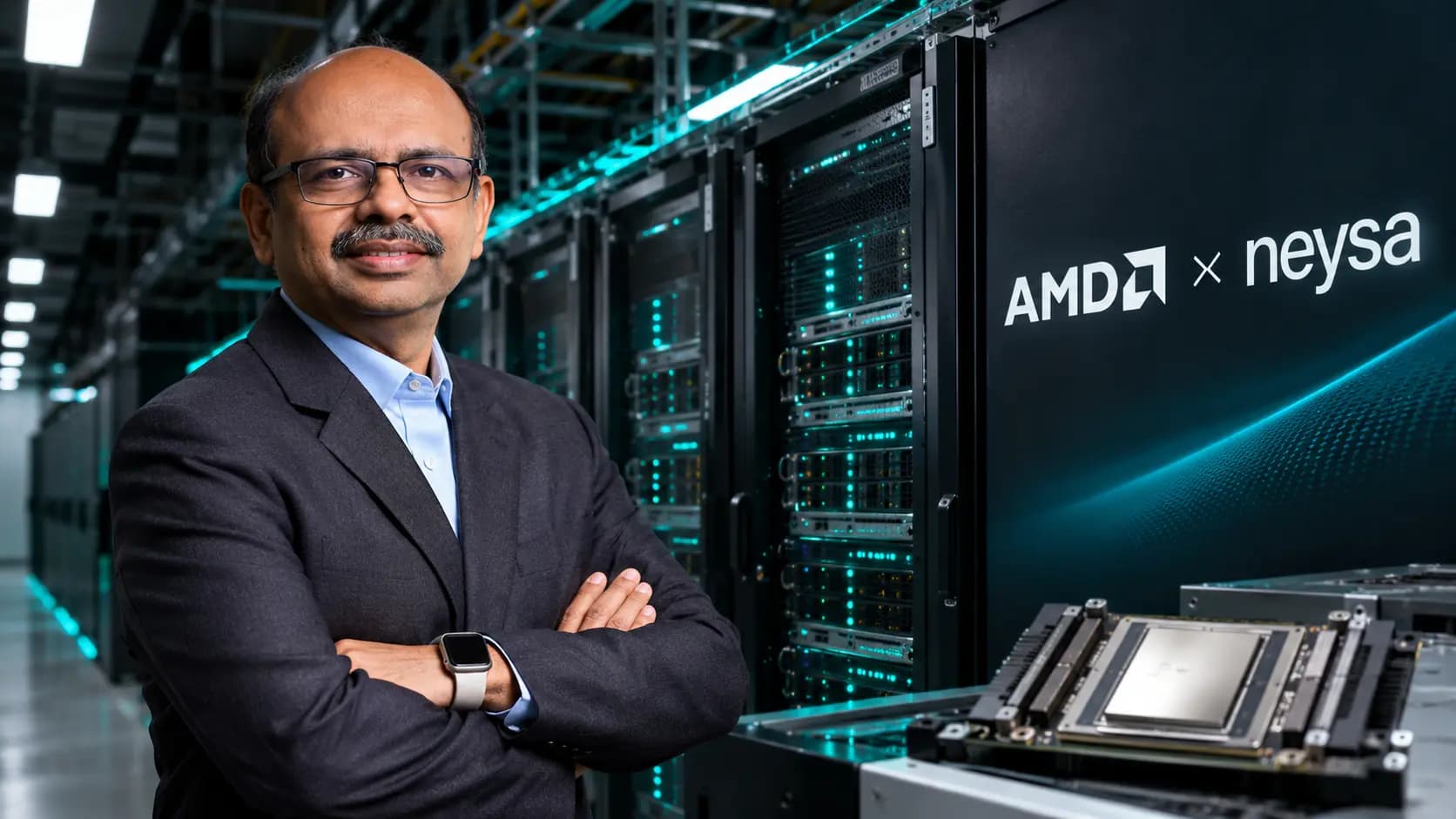
Indian AI cloud provider Neysa has deployed an 8,192-GPU cluster powered by AMD Instinct MI350X accelerators in Mumbai, expanding the country's dedicated computing infrastructure for artificial intelligence (AI) workloads. The operational deployment is hosted on Neysa Tytan, the company's bare-metal AI infrastructure platform, and is designed to support large-scale model training, fine-tuning and inference.
The deployment marks another development in India's growing AI infrastructure sector, where demand for high-performance computing resources is increasing among businesses and technology companies. According to Neysa, global customers have already contracted capacity on the cluster to support large-scale AI operations in India.
Neysa Expands Dedicated AI Computing Capacity
The newly deployed infrastructure combines AMD Instinct MI350X GPUs, AMD EPYC processors and the AMD ROCm open software ecosystem. It is designed to support a range of demanding computing applications, including large language model (LLM) training, generative AI development, model fine-tuning and high-throughput inference.
The cluster was brought online in a single phase in Mumbai. Its dedicated bare-metal configuration allows customers to access physical computing resources rather than relying on shared virtualised infrastructure.
This arrangement is particularly relevant for organisations operating large AI workloads that require predictable computing capacity, greater control over infrastructure configurations and reliable performance.
Neysa said the deployment expands the accelerator options available through its Tytan platform and supports its silicon-agnostic infrastructure strategy. This approach allows customers to select computing hardware and configurations according to their workload requirements.
AMD Instinct MI350X Powers the New Cluster
The AMD Instinct MI350X is designed for demanding AI and high-performance computing applications. Based on AMD's CDNA 4 architecture, the accelerator supports large-scale AI model development and inference workloads.
The deployment also uses AMD EPYC processors for server computing and the ROCm software ecosystem for developing and running applications on AMD hardware.
ROCm provides developers with software tools and libraries for building and optimising AI applications. Its open ecosystem is intended to give businesses and developers greater flexibility when selecting computing infrastructure and software environments.
Through the partnership, Neysa aims to provide customers with an alternative to infrastructure configurations built around a single accelerator manufacturer. This flexibility could help organisations evaluate different hardware options based on performance, software compatibility and operational requirements.
Neysa Tytan Offers Flexible Infrastructure Configurations
The GPU cluster is deployed through Neysa Tytan, the company's dedicated bare-metal AI infrastructure offering for organisations running critical workloads at scale.
The platform allows customers to configure their infrastructure according to their operational needs. Available deployment options include bare metal, bare metal with Slurm and bare metal with Kubernetes.
Slurm is a workload scheduling system commonly used to manage computing resources and large-scale processing jobs. Kubernetes helps organisations deploy and manage containerised applications across computing environments.
These configurations provide different ways to organise AI workloads, manage computing resources and coordinate applications. Neysa manages the deployment and operation of the infrastructure while customers retain control over their preferred architecture, operating environment and service requirements.
The company said the platform is designed to provide dedicated capacity, infrastructure assurance and greater operational control for customers deploying AI applications.
Global Customers Have Already Contracted Capacity
Neysa stated that global customers have already contracted capacity on the newly operational cluster for AI deployments in India. However, the company has not publicly disclosed the names of these customers, contract values or the exact distribution of computing capacity among different workloads.
The development reflects growing demand for dedicated AI infrastructure as organisations move beyond experimentation and begin deploying AI applications at production scale.
Large AI models require substantial computing resources for training and inference. Businesses also need reliable networking, storage systems and software environments to ensure that their applications operate efficiently.
Dedicated infrastructure can help organisations secure the computing capacity required for these activities while maintaining greater control over their technology environments.
India's Growing Role in Global AI Infrastructure
The deployment comes as India strengthens its position as a destination for AI computing infrastructure. Technology companies, cloud providers and data centre operators are expanding their capabilities to support increasing demand for AI services.
Neysa's Mumbai cluster is intended to serve both Indian enterprises and international customers looking to establish computing capacity in the country.
The company also offers Neysa Velocis, a managed AI cloud platform that combines GPU computing, orchestration, inference, observability and cost management. While Velocis provides a managed environment for AI workloads, Tytan focuses on dedicated bare-metal infrastructure for customers requiring committed capacity and greater architectural control.
The addition of AMD Instinct MI350X accelerators expands the hardware choices available to businesses using Neysa's infrastructure services.
What the Deployment Means for India's AI Ecosystem
Access to advanced computing infrastructure is becoming an important factor in India's AI development. Research organisations, startups and enterprises require powerful hardware to train models, develop applications and operate AI systems at scale.
Neysa's deployment adds dedicated GPU capacity within India and provides another infrastructure option for businesses developing AI applications. Its partnership with AMD also highlights the growing importance of open computing ecosystems and alternative accelerator technologies.
However, the long-term impact will depend on infrastructure utilisation, operating costs, software compatibility and the ability to deliver reliable computing services to customers.
As demand for generative AI, enterprise automation and large-scale model development continues to grow, investments in dedicated computing infrastructure could play an important role in strengthening India's position in the global AI industry.
Source:- Neysa